Biodynamic farming grew out of a series of lectures given in 1924 by an Austrian occultist writer named Rudolf Steiner. It’s interesting to note that Steiner himself was only tangentially concerned with agriculture; for him it was just one application of his broader spiritualist worldview, which drew heavily from Goethe. But his lectures, which were collected in a book simply called Agriculture, form the basis for modern biodynamic farming.
The topics of these lectures ranges broadly; however, at the core of the talks is a sentiment that is wholly reflected in the modern charter of the Demeter association, the principal certifying organization for biodynamic farming:
“The aim is always to practice agriculture in such a manner that structuring the farm as an integrated unit results in productivity and health, and that those inputs needed for production are generated out of the farm itself.”
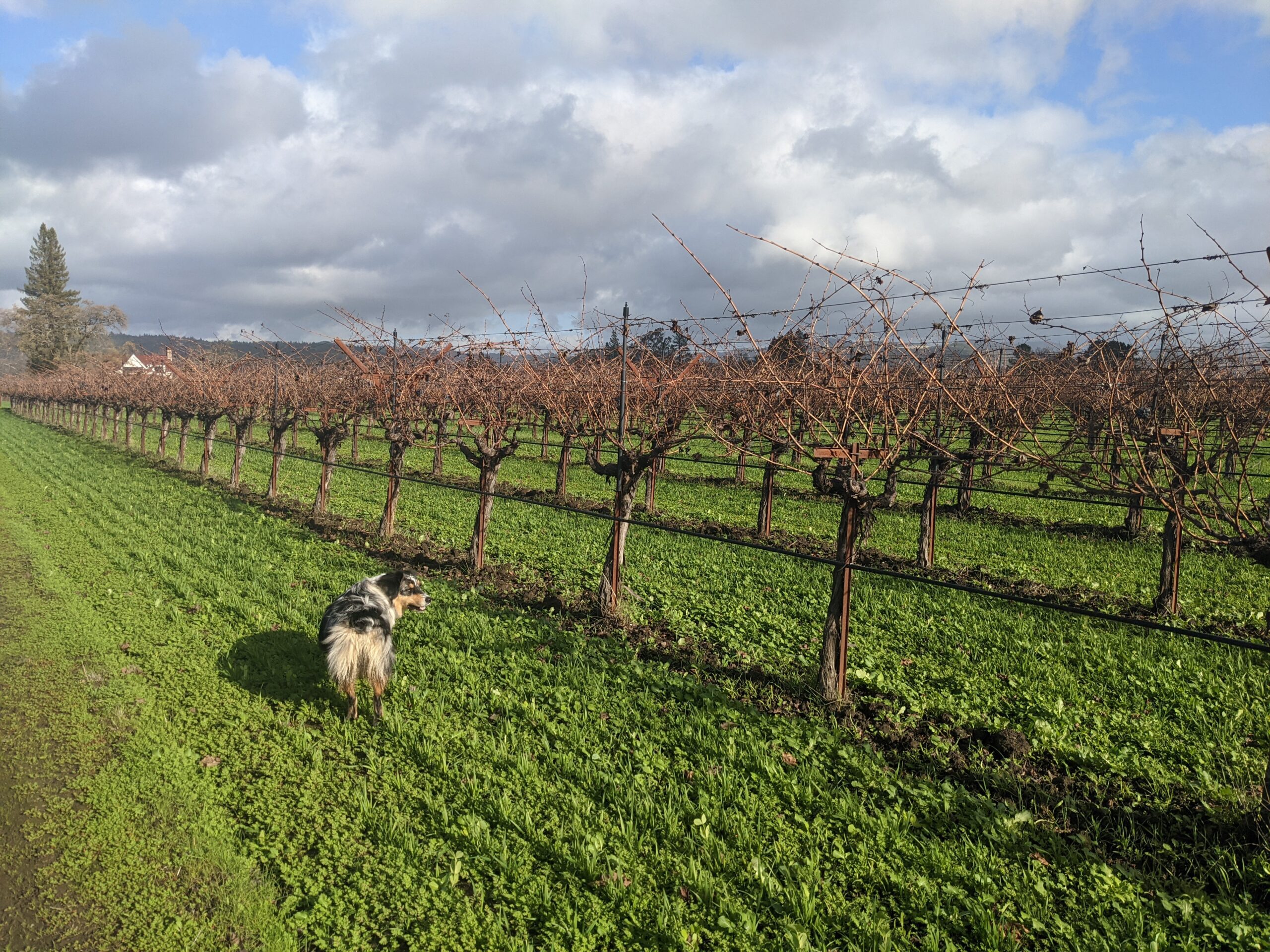
This is a sentiment that Frog’s Leap entirely supports. The vast majority of the nutrition that our vines require to grow and thrive is provided by a combination of the winter cover crops we seed each year at the end of harvest, and the compost we make at our Rutherford winery from the spent skins, seeds and stems of our wine grapes.
We firmly believe that our role as farmers is to be essential stewards of the life and energy cycles of our farm, rather than simply looking to extract as much (fruit) as possible from its soils in a given time. Beyond producing our own inputs, we also intentionally give over roughly 10% of our arable land to riparian habitat, hedgerows, and native plantings that diversify and strengthen our farming system, allowing for a healthy balance of give and take. Demeter admirably states:
“Fundamental to all [biodynamic] activity and products is the recognition that as humans we rely on the generosity of the natural world and the collaboration of human activity with this to nourish, care and clothe human beings.”
Our own vision directs us to “Be a model for the accord between good business, good farming and world citizenship.” In other words, we share quite a lot of common ground with biodynamic principles, however, in the era of modern farming, the Demeter charter continues to draw from some of the more pseudo-scientific and occultist leanings of Steiner’s proposed system:
“Spiritual scientific knowledge indicates that components of mineral, plant and animal origin can be metamorphosed by the effects of cosmic/earthly influences during the course of the year, into preparations imbued with forces.”
And this is the part that gives us pause. We’ve all seen clips… burying cow horns stuffed with manure and misting crystal tinctures by the light of the moon — Steiner, and the Demeter association require certain preparations designed to imbue material objects with cosmic forces (i.e., from Mars or the Moon) for certification. And while in practice we believe these preparations are mostly harmless adjuncts to the vineyard, in principle, they are problematic for us because, in the words of Viticulturalist and Winemaker Rory Williams, “ That’s a bunch of nonsense.”
And so, while many have suggested that we simply overlook our skepticism and make the preparations in order to achieve biodynamic certification (it would pretty much be that easy), we feel the need to stand our ground. Yes it would be awesome to claim credit for our biodynamic practices but we simply can’t get past the (literal) bullshit.
Our position on the matter boils down to this — while it’s not our place to question anyone regarding their beliefs about cosmic forces, we won’t be applying crystal tinctures or burying cow horns in our own vineyards any time soon merely so that we can tick a box and add another certification to our label.
So, all that said, we are proud to be a Certified Organic farming operation (since 1989), meaning we must prove each year at our annual inspection that we have avoided synthetic pesticides and fertilizers, never use GMOs, actively manage our land to build healthy soil and clean water (to measurable standards), and are inspected regularly by third‑party certifiers who hold us to account.