

For The Wine Curious
Notes on Concrete Aged Sauvignon Blanc
Recent Accolades
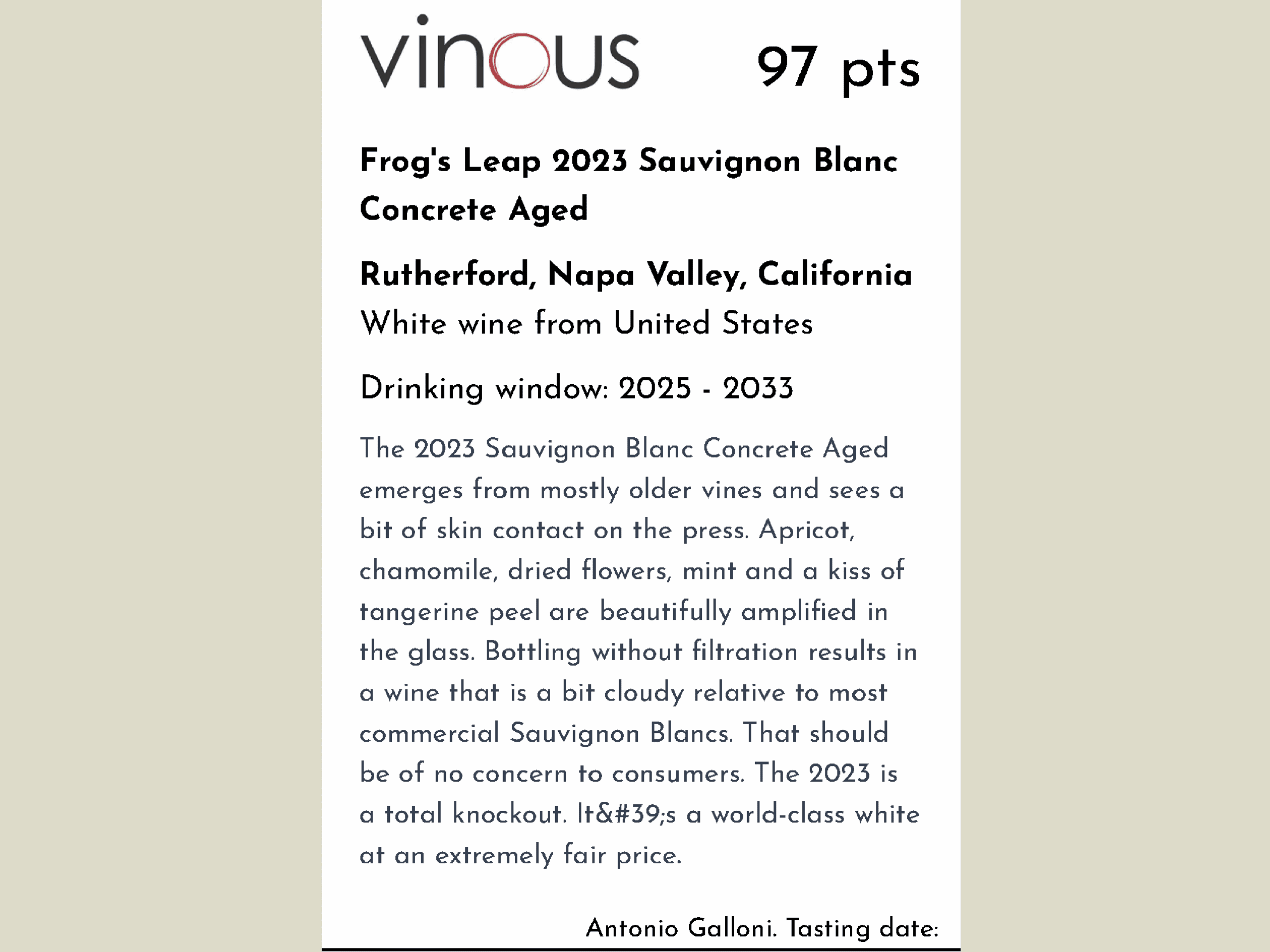
The Eggs
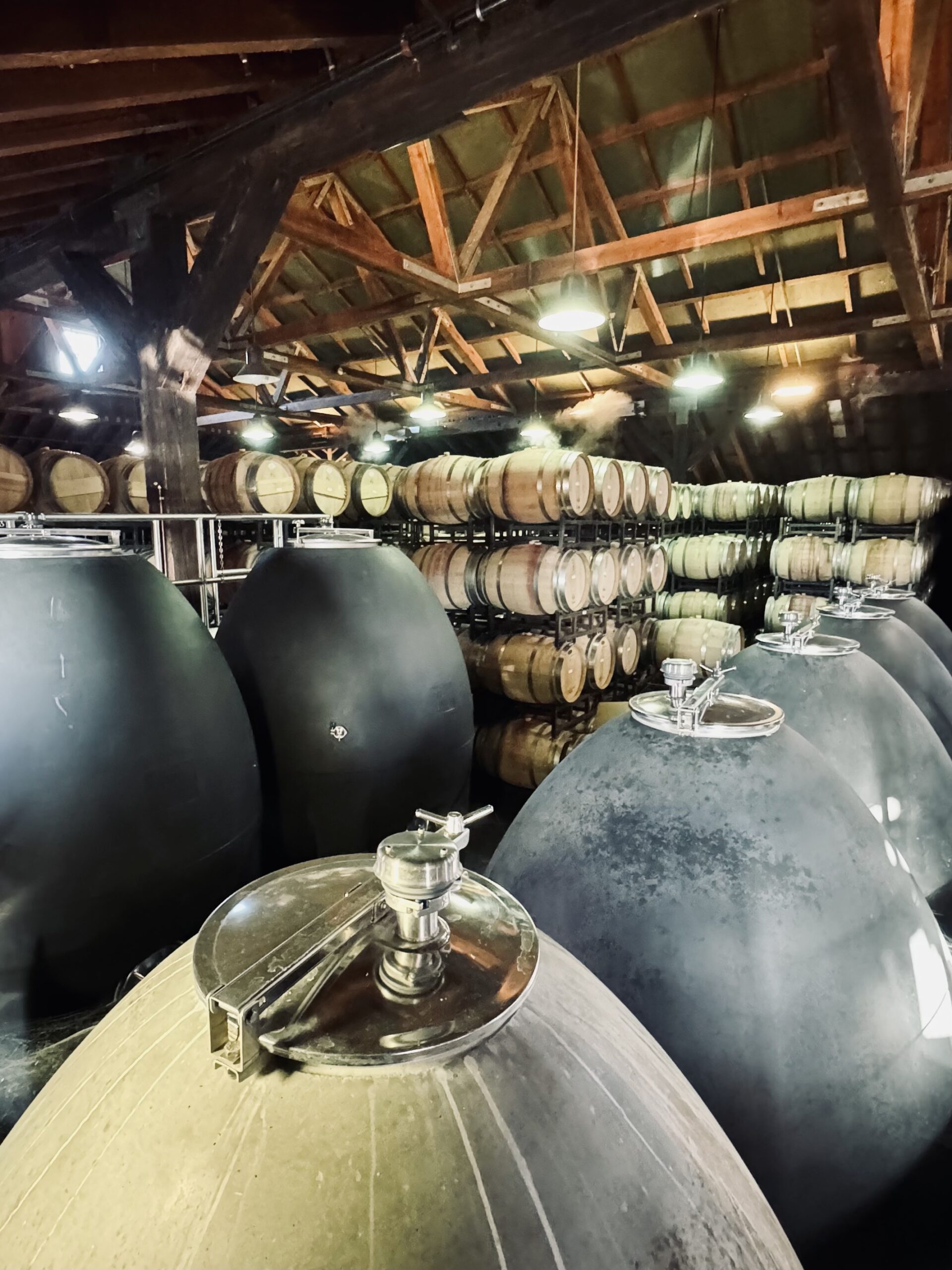
Old Cane, Williams Rossi
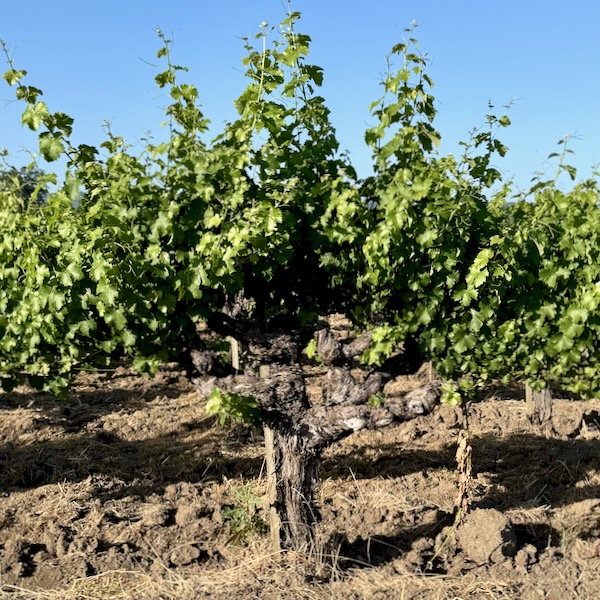
Galleron Vineyard, Rutherford
White Wine Line Up

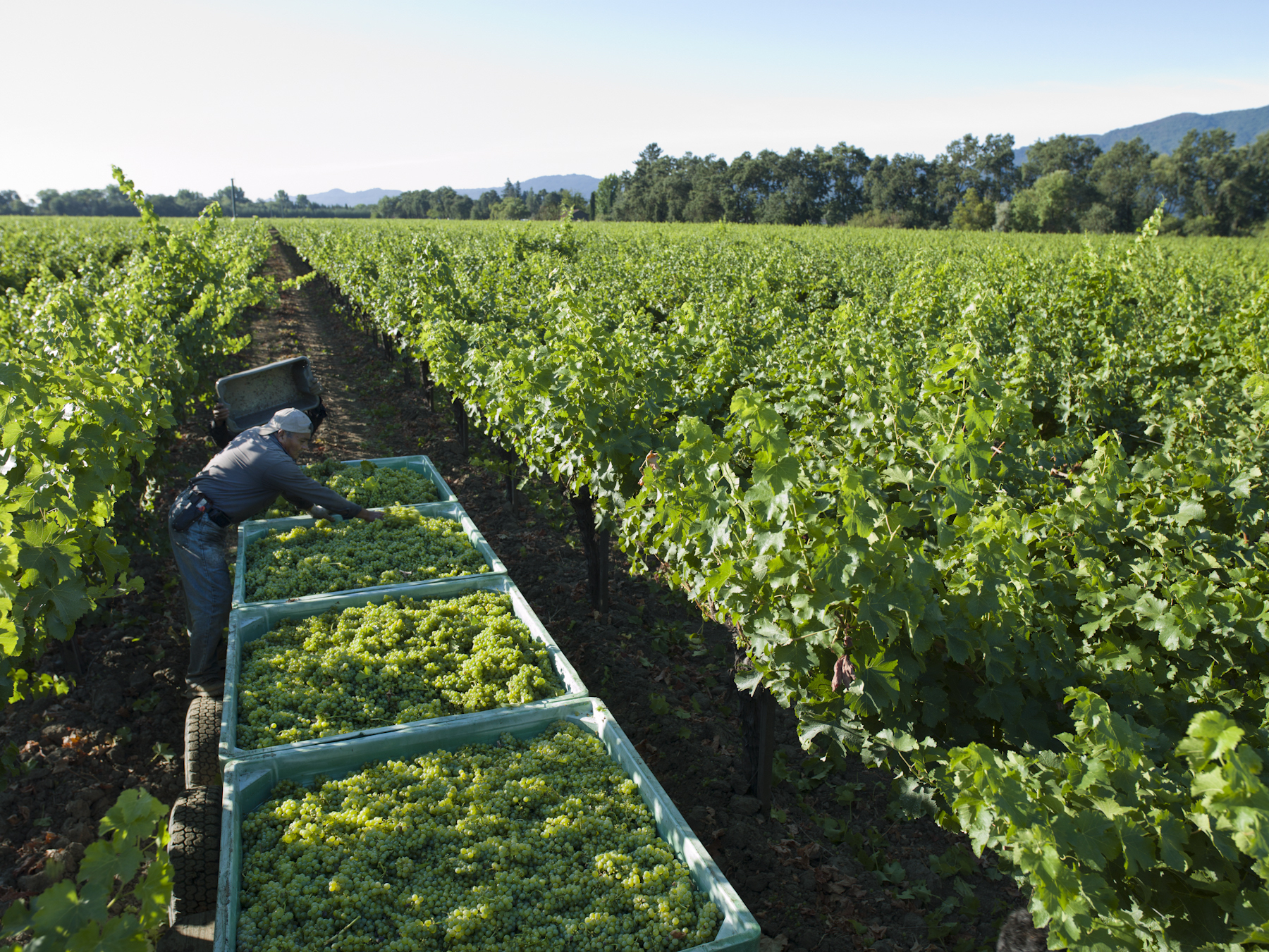
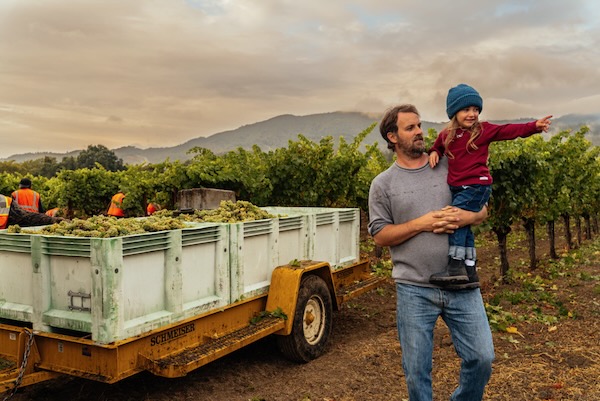
Rory and Alma Williams, Harvest 2023
Concrete Aged Sauvignon Blanc
Our Concrete Aged Sauvignon Blanc weaves together two threads of Napa Valley history. In 1981, Frog’s Leap produced its first wine, a Sauvignon Blanc made with fruit purchased from vineyards owned by Spottswoode. That same year, grape growers Ray Rossi and Louise Rossi replanted a block of their family’s Rutherford vineyard to this emerging varietal. Fast forward to 1996, when vineyard manager Frank Leeds introduced Founding Winemaker John Williams to the Rossi family, and Frog’s Leap began to purchase their fruit, including some lovely Sauvignon Blanc from the now well-established vines.
By 2000 Frog’s Leap had assumed farming responsibilities for the Rossi vineyards, and in 2007 the winery was able to purchase the property. The cane pruned Sauvignon Blanc continued to produce outstanding fruit and in 2015, the “Old Cane” Sauvignon Blanc from this ranch, now known as the Williams Rossi Ranch, became the first wine that Frog’s Leap ever fermented and aged entirely in concrete — a concrete egg to be exact.
The wine from that experimental egg was a revelation, and what started as one egg of “Old Cane” is now nine eggs of Concrete Aged Sauvignon Blanc (2,000 cases). Concrete has the effect of locking in the freshness of a wine, while still allowing it to mature and deepen in complexity; the cheery, lemon-grapefruit aromatic profile of youthful SB is transformed into a lightning bolt of lemon curd, orange blossom, and flinty smokiness when aged in this medium. The extended time on the lees adds tremendous umami—or depth and richness—born directly from concrete’s tendency to keep lees in suspension for months on end.
These specialized aging vessels allow our winemaking team to explore the subtle variations in soil, terrain, clonal selection, and vine age across the winery’s 44 acres of estate-grown, certified organic, dry-farmed Sauvignon Blanc vines. Each season, Viticulturist and Winemaker Rory Williams combs the vineyards and identifies individual blocks of exceptional fruit (one for each of the eggs). The end result is a mineral-driven, complex Sauvignon Blanc that captures the full potential of a plot of soil—the same qualities that attracted Founding Winemaker John Williams to the grape more than 40 years ago.
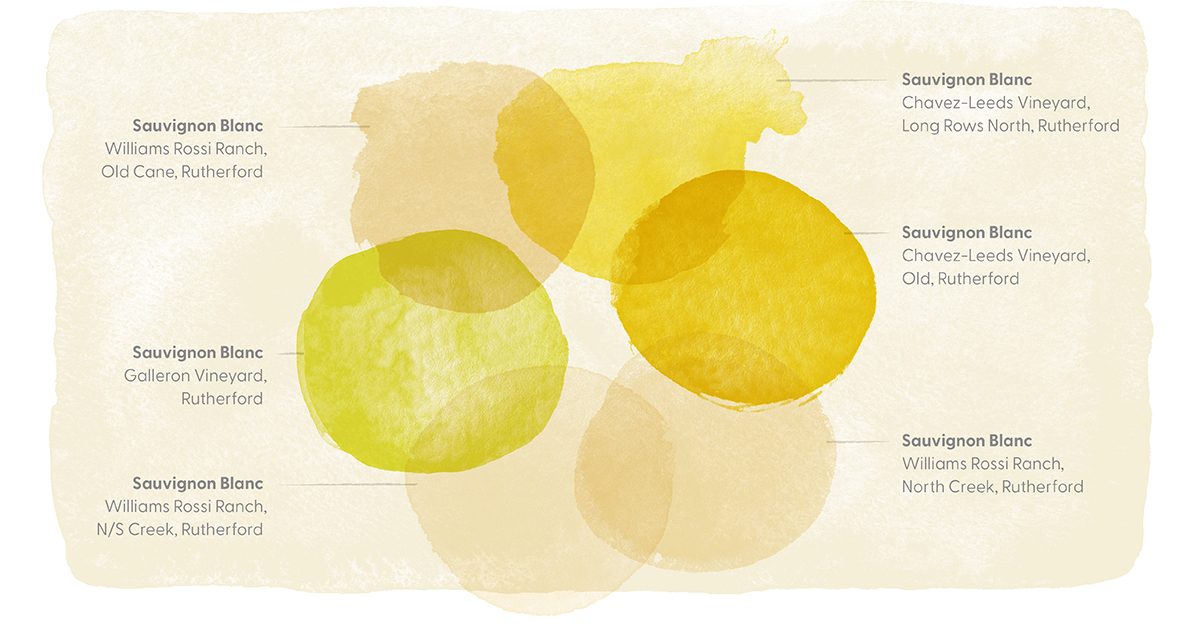
Explore How Viticulture Arrives In The Glass...
North Creek block southern clays, Williams Rossi Vineyard, Rutherford
Planted 2008 in dark-to-light Adobe clay, Emmolo clone on St. George
Flavor Profile: Mineral, ringing acidity, Lima Mexicana, Stones & savory
Old Cane block, Williams Rossi Vineyard, Rutherford
Planted 1981 in gravelly loam, Emmolo clone on St. George
Flavor Profile: No fruit, all texture; Long, mineral
North Creek block northeastern loam, Williams Rossi Vineyard, Rutherford
Planted 2008 in a loamier subtype of Maxwell clay, Emmolo clone on St. George
Flavor Profile: Grapefruit pith, raspberry lemonade, chamomile tea
Old Long Rows block, Chavez-Leeds Vineyard, Rutherford
Planted 1984 in lighter Adobe clay, old-vine Mondavi TK clone on St. George
Flavor Profile: Savory ripe-mineral; Meaty, long finish, extraterrestrial
North Long Rows block, Chavez-Leeds Vineyard, Rutherford
Planted 1988 in lighter Adobe clay, Emmolo clone on St. George
Flavor Profile: Pineapple tangy-mineral; Rich, complex, explosive
South Long Rows block, Chavez-Leeds Vineyard, Rutheford
Planted 1988 in darker Adobe clay. Emmolo clone on St. George.
Flavor Profile: Lovely savory-fruity, creamy citrus rind; Pico de gallo, tension
Old Block 4 East, Galleron Vineyard, Rutherford
Planted 2000 in deep Yolo series river loam, Clone 1 on St. George.
Flavor Profile: High tone green apple, fat, lemongrass, yellow cherry, generous